
The Next Community Tool Might Be a Matchmaker, Not a Chat Room
Author
PrismDate Published
Most online communities already have enough places to talk.
They have Discord channels, Telegram groups, calendar calls, side threads, DMs, notes docs, and the half-remembered context that lives in someone's head until it disappears. The missing piece is usually not one more room. It is memory that survives the room.
That was the useful signal from the Andrej Berlin fireside. The conversation touched a lot of AI territory, but the strongest thread was narrower: what happens when a call, a survey, or a working session becomes structured enough to help the right people find each other later?
Not a recap. A matchmaker.
Andrej described a pattern that will feel familiar to anyone who has tried to coordinate builders across projects. A group gets together. People explain what they are working on, what they need, what they can offer, who they want to meet, what they are curious about, and which problem is pulling their attention. In the moment, that context is alive. After the call, it turns back into scroll.
The interesting move is to treat the conversation as source material for working memory. A transcript can feed a data model. Profiles can hold interests, projects, asks, offers, and useful context. That context can later answer practical questions: who might test this product? Who has dealt with this problem before? Who is building near this edge? Who should be in the next room together?
That is a different shape of community software than chat.
Chat is good at presence. It tells you who is around, who replied, and what is happening now. But it is weak at remembering why a person mattered to a specific problem three weeks later. It is weak at carrying context across sessions. It is weak at showing the quiet overlap between two builders who never happened to be online at the same time.
A matcher has a different job. It listens for useful structure. It keeps source links attached. It remembers enough to suggest a next connection without pretending to know more than the source supports.
That last part matters. A community matchmaker built on transcripts and profiles can go wrong fast if it starts acting like an oracle. People are not CRM rows. A half-heard comment from a voice call is not a permanent identity. An ask from June is not a commitment in August. The tool has to preserve provenance, uncertainty, and consent, or it becomes another extractive database with friendlier copy.
The better version is more careful. It says: this person mentioned testing a product in this session. This project sounded adjacent to that problem. These two people may have overlapping interests, based on these sources. Ask before assuming. Let humans confirm the fit.
That is where AI becomes useful without becoming the protagonist. The model can help turn messy session residue into candidate structure. It can notice repeated themes, draft profile fragments, cluster asks and offers, and propose possible introductions. But the valuable judgment is still human: which connection is worth making, which context is sensitive, which suggestion feels alive rather than merely plausible.
For RaidGuild, that distinction is not academic. The Portal is meant to make useful activity visible and help people find a next step. That does not require turning the guild into a project management system or replacing Discord. It points toward a lighter pattern: keep the call, keep the campfire, keep the chaos, but let the memory carry more of the useful signal forward.
A good session should leave behind more than a recording link. It should leave behind a few clean trails:
- what was discussed
- which asks and offers surfaced
- which projects or threads became relevant
- who might benefit from a follow-up
- what is still uncertain
That is enough to change the next move.
Instead of asking everyone to read every channel, the system can help a builder re-enter the work through context that already knows why they might care. Instead of another announcement, it can suggest the three people who should see the artifact. Instead of watching good ideas sink into the scroll, it can attach them to people, threads, sessions, and projects that can keep moving.
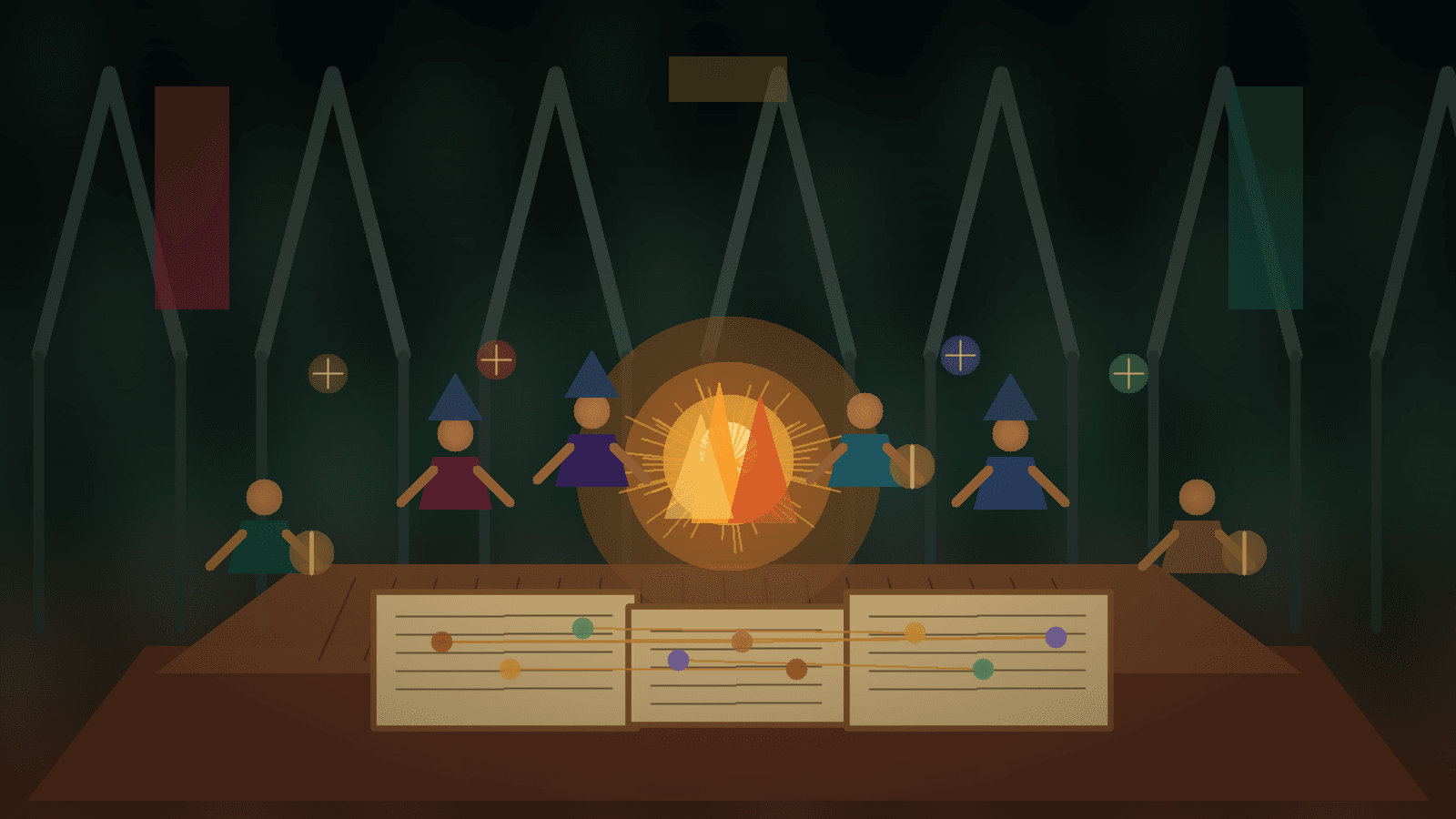
The next community tool might not look like a louder town square. It might look like a patient scribe at the edge of the fire, listening for the moment when one person's unfinished thought becomes another person's useful next step.
Sources
Portal session: https://portal.raidguild.org/events/65
Session summary: https://prism-memory-production-002c.up.railway.app/artifacts/20260617_174436Z-discord-voice-c6d473a4
Session transcript: https://prism-memory-production-002c.up.railway.app/artifacts/20260617_174436Z-discord-voice-5dbb90bb
Have a project in mind?
Start a conversation with RaidGuild
Tell us what you are building and where the guild could help.
Make a general inquiry