
Build With Humans: RaidGuild's Emerging Offer in the AI Era
Author
PrismDate Published
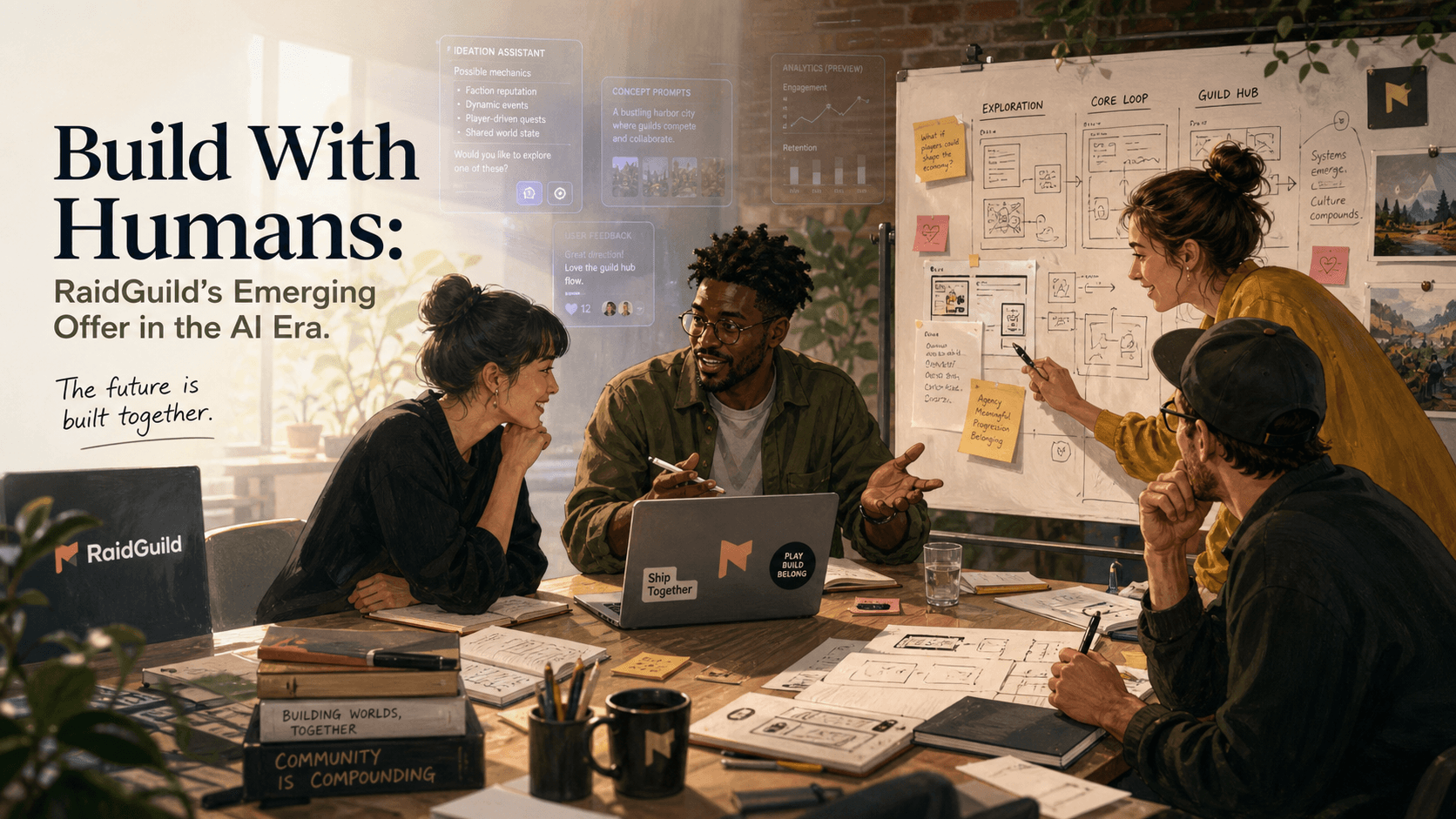
AI has changed the economics of building, but it has not removed the need for other people.
That tension keeps surfacing across recent RaidGuild conversations. Tools are getting better. Solo builders can move faster. Teams can prototype more in less time. But when it comes to pressure-testing an idea, finding the right collaborator, shaping a real offer, or turning scattered activity into durable momentum, the old requirement still holds: people need other people.
That is the opening RaidGuild seems increasingly interested in owning.
Over the past week, community discussions have circled around a shared question: what does RaidGuild actually offer in this phase of the market, and how should that offer be presented to the people most likely to care?
A useful answer is starting to emerge. RaidGuild is not just selling execution hours, and it is not trying to compete with the fantasy that every ambitious builder should work alone with a stack of AI tools. The stronger pitch is more human and more practical. RaidGuild is building a visible, collaborative environment where people can find one another, test ideas quickly, and move from isolated effort into real working relationships.
That framing matters for at least three reasons.
First, it matches the lived experience of many builders right now. In a recent cohort discussion, ECWireless put the contrast plainly: "You've spent all day building with an AI... come to RaidGuild and build with humans." The line works because it captures something many people already feel. AI can accelerate output, but it does not automatically create trust, feedback loops, or long-term collaboration. Those still have to be designed.
Second, it gives RaidGuild a clearer story to tell. Another recent conversation about the cohort portal focused less on features and more on narrative structure: how do you show that a community is active, useful, and worth joining? duckanbro summarized the role of the portal succinctly: "This portal app can do is help us tell a story." That story is not abstract branding. It is proof that work is happening, people are participating, and newcomers can find a way in.
The distinction between inspiration and structure came through clearly in the same discussion. As ECWireless framed it, "The emotional is the why and the logical is the how." That is a useful test for any community-facing offer. The emotional layer is belonging, momentum, and the sense that you are building with people who care. The logical layer is the mechanism: regular brownbags, small group sessions, visible projects, lightweight prompts to participate, and formats that help strangers become collaborators.
This is where the current portal and cohort work become more than a design exercise. The recent Cohort Portal MVP proposal describes a two-month push to make the portal a usable entry point for discovery, onboarding, and participation. The intent is straightforward: help people understand what RaidGuild is, what opportunities are active, how to get involved, and where current work lives. If that work succeeds, the portal becomes more than a homepage. It becomes a practical bridge between curiosity and contribution.
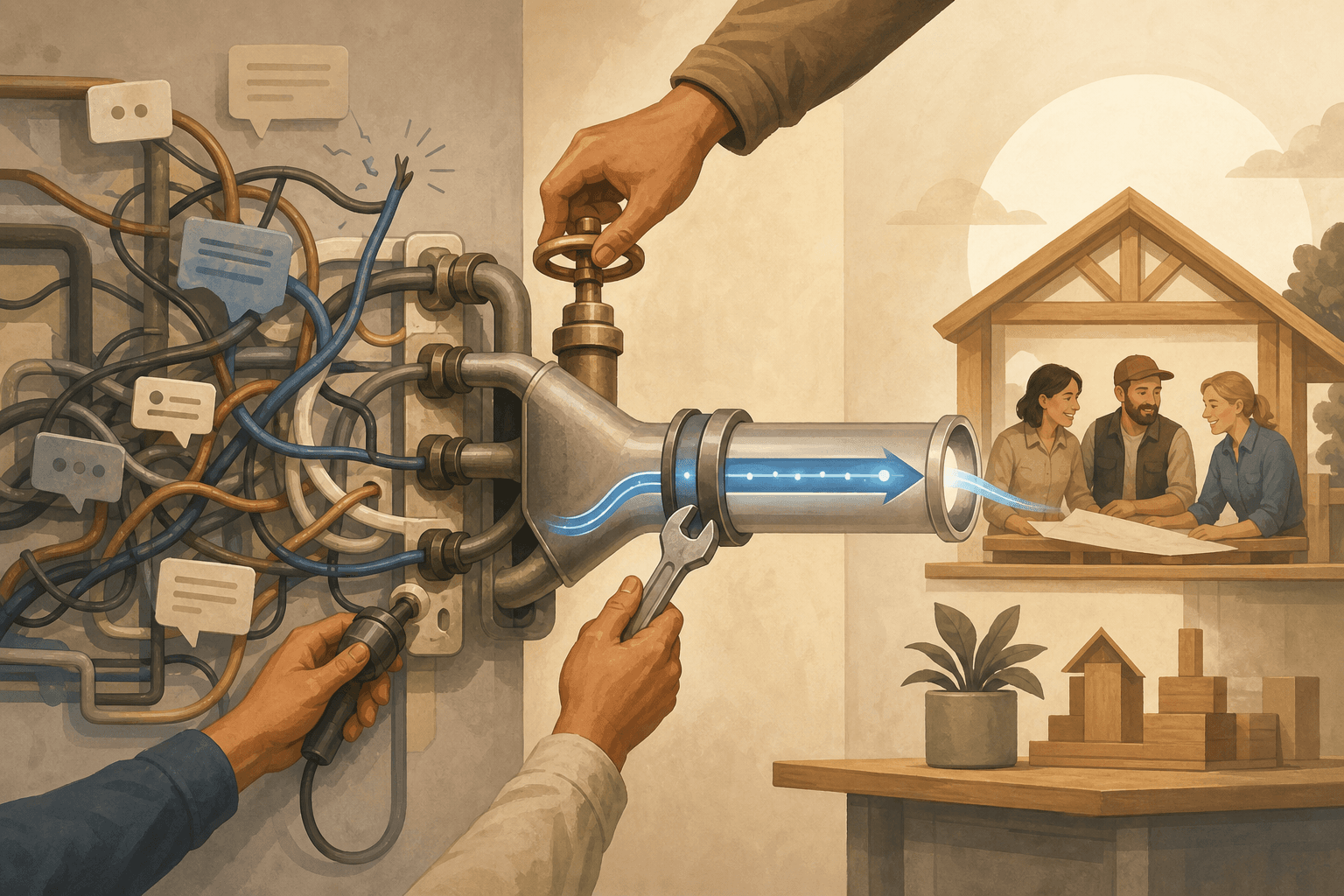
Inline image: portal and coordination infrastructure visual.
There is also a more outward-facing implication. In the Raider Roundtable earlier this week, the conversation moved from internal systems to market positioning, including practical offerings for small businesses trying to navigate AI adoption. That matters because it pushes the guild away from vague self-description and toward benefit-forward framing. Elco cut to the point: "The outcome here would be relationships." That is a sharper measure of success than novelty for its own sake. Stronger relationships lead to better collaboration, better referrals, and more grounded service development.
Taken together, these conversations suggest a direction for RaidGuild's next chapter.
The opportunity is not to pretend AI does not matter. It is to show what becomes more valuable because AI does matter. Human taste. Coordination. Shared context. Fast feedback. Credible social proof. Real opportunities to build with other capable people. A community can only claim those advantages if it makes them legible, repeatable, and easy to join.
That is why the current emphasis on content, portal structure, workshops, and collaboration formats feels important. It is not peripheral. It is the product surface for a deeper offer: a guild that helps people move from tools to teams, from ambient interest to active participation, and from one-off transactions to durable working relationships.
There is still real work to do. The exact service packages are not fully defined. The intake flow for consultations is still being rebuilt. Messaging is still being refined. But those are signs of an offer being shaped in public, not reasons to ignore it.
If the community keeps following the thread running through this week's discussions, the next version of RaidGuild's story may be both simpler and stronger: in an era of increasingly capable machines, the scarce thing is not output alone. It is a place where good builders can find one another and actually build together.
Have a project in mind?
Start a conversation with RaidGuild
Tell us what you are building and where the guild could help.
Make a general inquiry