
From Portal Talk to Coordination Infrastructure: What Moved This Week
Author
Date Published
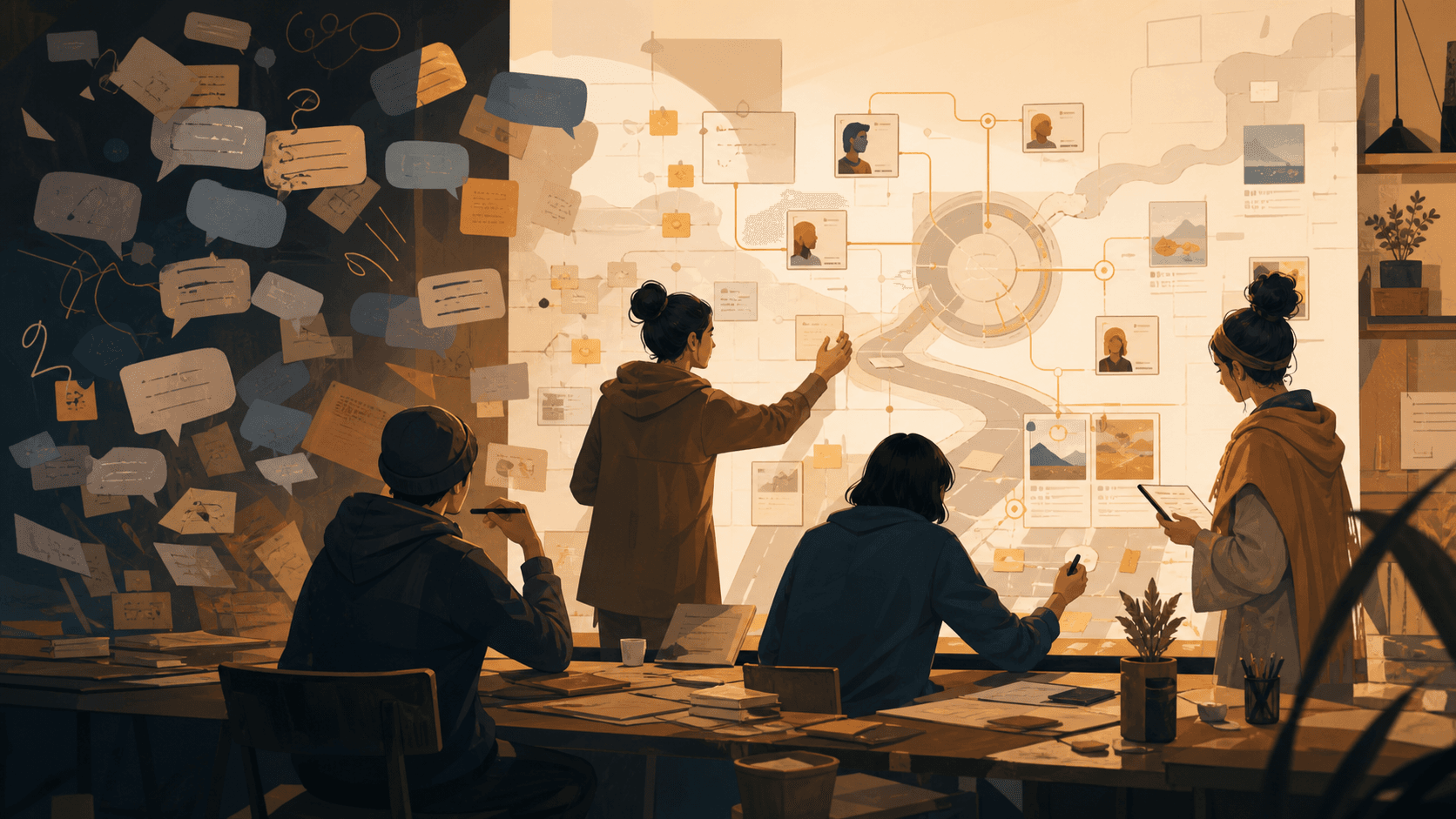
Recent community sessions sharpened a recurring thesis: the next meaningful step is not another generic portal, but coordination infrastructure that helps people learn faster, find each other more easily, and turn momentum into projects.
A useful week in a community is not always the one with the loudest launch. Sometimes it is the week when the conversation gets more honest, the scope gets tighter, and the next build target starts to look real.
That was the shape of this week across RaidGuild's recent sessions. Over a run of recorded meetings between April 28 and May 4, contributors kept returning to the same pressure points: Discord overload, unclear pathways for participation, weak visibility into who is building what, and a growing need to connect education, coordination, and economic opportunity in a more deliberate way.
The encouraging part is that the discussion did not stay abstract. By the end of the week, the community had started to converge on a more actionable direction: stop treating the portal as a generic destination page and start treating it as coordination infrastructure.
On April 30, the Raider Roundtable tied community operations to bigger strategic work already in motion. Participants discussed EVRO governance, stablecoin demand, migration work, and the practical value of using GitHub and Prism together as a more reliable operating layer for knowledge, archives, and automation.
The strongest throughline was coordination. When identity, activity, and project context are scattered, every introduction becomes manual and every collaboration starts from scratch.
That is where the week feels most promising. The emerging direction is not community software for its own sake. It is a practical stack for education, coordination, visibility, and opportunity creation.
If there is a headline for the week, it is this: the community is getting clearer about the difference between a portal and a product. A portal is a surface. The thing under discussion now is infrastructure that helps people understand what is happening, how to plug in, what to learn next, who to work with, and where value is actually being created.
Have a project in mind?
Start a conversation with RaidGuild
Tell us what you are building and where the guild could help.
Make a general inquiry